
Turn Cleared Material Into Usable Mulch
Wood Grinding in Western Wisconsin for properties with piles of logs, brush, and tree debris following land clearing or storm damage
KithTerra Excavating offers wood grinding services that process cleared trees, stumps, and brush into mulch directly on your property in Boyceville and nearby communities. You need this service after a land clearing project leaves behind large piles of organic material, or when storm damage fills your yard with downed limbs and uprooted trees that are too bulky to haul away in a trailer. The grinding crew brings a commercial wood grinder to your site, feeds the material through the machine, and reduces it to uniform chips that you can spread, compost, or leave in designated areas instead of paying to transport tons of debris to a landfill.
Wood grinding eliminates the need for multiple truckloads and dump fees while producing mulch that improves soil moisture retention and suppresses weed growth across acreage or landscaping zones. In rural areas around Boyceville, where properties often include wooded lots and pasture edges, grinding makes sense when you're clearing fence lines, creating trails, or removing overgrown vegetation and want a cleaner site without the expense of hauling. The process is efficient—crews can grind several cords of wood in a single day—and the resulting mulch settles into a manageable layer that decomposes naturally over time.
Schedule grinding services after your next clearing or cleanup project to handle the volume without filling a dumpster or making repeated trips to a disposal site.
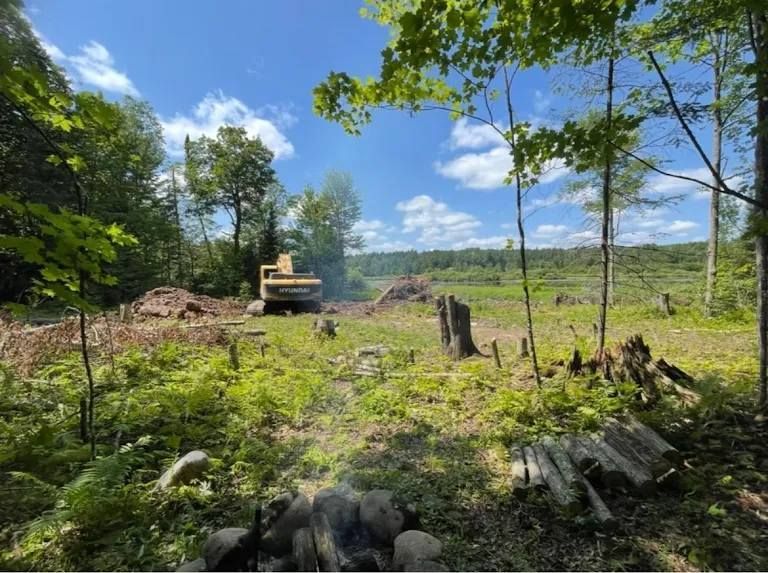
On-Site Processing Reduces Hauling and Waste
When the grinding crew arrives, you see a tracked or wheeled grinder positioned near your material pile, equipped with rotating teeth that shred logs up to twelve inches in diameter and reduce brush to fine chips in seconds. You feed the machine using an excavator or skid steer, or the crew handles loading if you lack equipment, and the grinder discharges processed mulch into a spreading pile or designated area on your property. The noise is significant—hearing protection is required within fifty feet—but the work moves quickly and leaves your site clear of the tangled piles that complicate mowing, planting, or construction access.
After KithTerra Excavating finishes grinding, you notice a clean work area with no visible logs, limbs, or stumps, and a pile of fresh mulch that you can use around outbuildings, pathways, or garden beds. The mulch settles to a depth of several inches depending on the volume processed, and it continues to compact as it breaks down. Your property looks maintained rather than cluttered, and you avoid the cost and labor of hauling debris off-site.
Grinding works best when the material is dry and free of dirt, rocks, or metal that could damage the machine teeth. KithTerra Excavating grinds organic material only—logs, branches, stumps, and brush—and does not process treated lumber, fence posts, or construction debris. If you're clearing a large acreage, the crew can grind in stages as clearing progresses, keeping the site manageable and reducing fire hazard from accumulated dry wood.
Questions Property Owners Ask About Grinding
Landowners in Boyceville often want to know what types of material can be processed, how long grinding takes, and what to do with the finished mulch.
What size logs can the grinder handle?
The grinder processes logs up to twelve inches in diameter, though larger material may require cutting into shorter sections before feeding to maintain efficiency and prevent jams.
How long does it take to grind a typical clearing pile?
A pile containing two to three cords of mixed logs and brush usually takes two to four hours to grind, depending on material density and moisture content.
Why is on-site grinding better than hauling debris away?
Grinding eliminates hauling costs, reduces landfill waste, and produces mulch you can reuse on your property, turning a disposal problem into a resource that benefits soil and landscaping.
When should I schedule grinding after a storm or clearing project?
You should schedule grinding once all material is piled and accessible, and after any additional clearing or grubbing work is finished so the crew can process everything in one mobilization.
How does KithTerra Excavating handle stumps mixed into the debris pile?
Stumps are ground along with logs and brush, though grinding stumps takes longer due to their density and root structure, and the finished mulch may contain larger wood chunks that break down more slowly.
Contact KithTerra Excavating to arrange wood grinding following your clearing or storm cleanup and keep your property accessible without the expense of hauling organic material off-site.