
Accurate Trenching for Underground Infrastructure
Trenching and Utility Excavation in Western Wisconsin for properties requiring buried water lines, electric service, or drainage systems
KithTerra Excavating provides trenching and utility excavation services for property owners in Boyceville who need underground infrastructure installed as part of new construction, service upgrades, or site development. You might be building a home that requires water and electric lines run from the road, adding a drainage system to manage runoff, or upgrading utilities on an older property. We dig trenches to the depths and widths your utility provider or engineer specifies, work around existing infrastructure, and backfill with compacted material once lines are placed. This work supports residential builds, agricultural projects, and property improvements where buried utilities are required.
Trenching in western Wisconsin requires attention to frost depth, which affects how deep water and sewer lines must be buried to avoid freeze damage. Local code typically requires water lines at least five feet below grade, and we adjust trench depth based on soil type, bedding requirements, and whether the line will carry pressurized water or gravity-fed drainage. We coordinate with utility contractors, inspect trench conditions before lines are laid, and ensure backfill is compacted to prevent settling over access routes or building zones.
If you need trenching for utilities or drainage on your Boyceville property, reach out to discuss a utility excavation quote and project timeline.
How Trenching Supports Infrastructure Installation
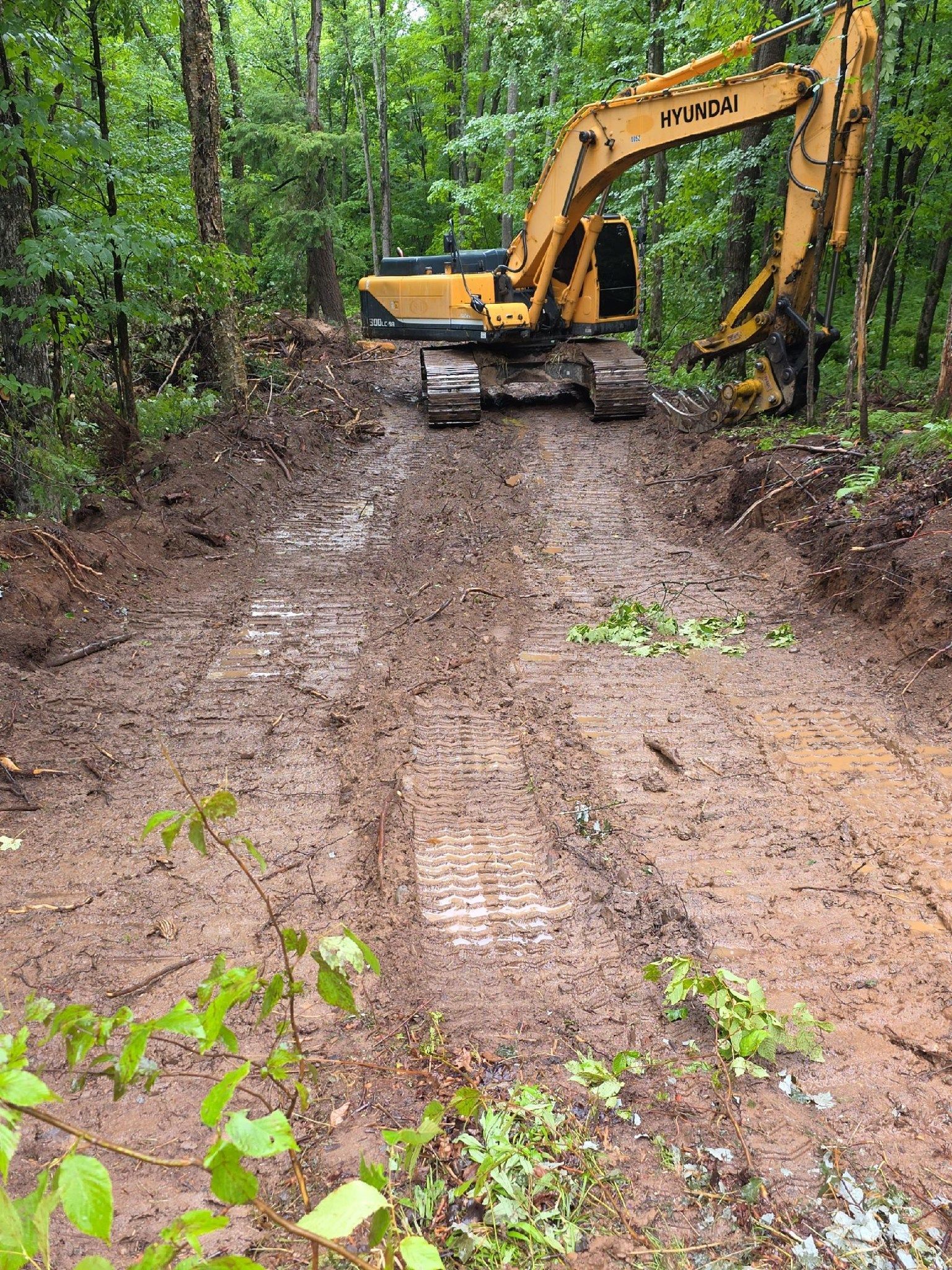
Trenching begins with marking utility routes based on your site plan, utility provider requirements, or engineered drawings. We use excavation equipment to dig trenches to specified depths, slope the bottom for drainage lines, and remove rocks or debris that could damage pipes or conduit. Once the trench is open and inspected, utility contractors or your plumber lay the lines, and we backfill in layers, compacting as we go to prevent voids or future settling. For electric or communication lines, we follow depth and separation requirements to meet code.
After KithTerra Excavating completes trenching and backfill, you will see utility lines buried below frost depth, stable ground over the trench route, and access paths that remain firm under vehicle traffic. The trenches will be gone, replaced by compacted fill that matches the surrounding grade. These results matter because poorly backfilled trenches settle and create low spots, especially along driveways or near foundations, and lines buried too shallow freeze or fail during Wisconsin winters.
We adjust trenching methods based on soil conditions, using trench boxes or sloped walls for safety in deep or unstable ground. Trenching does not include utility line installation or connection to mains, but it does provide the excavation, bedding, and backfill that protect those lines once they are in place. If your property has ledge rock or high groundwater, we work within those constraints and recommend solutions that fit the site conditions.
Questions About Utility Trenching
Property owners in Boyceville often ask how deep trenches need to be, what happens if we encounter rock or existing utilities, and how long trenching takes for typical residential projects.
How deep do water and electric lines need to be buried?
Water lines typically go at least five feet deep to stay below frost depth in Boyceville, while electric and communication lines may be shallower depending on conduit type and code requirements. We follow engineered specs and utility provider guidelines for each line type.
What happens if you hit rock while digging a trench?
We use excavation equipment capable of breaking through most rock, or we adjust the trench route if bedrock is extensive. Rock removal adds time and cost, but it ensures the trench reaches the required depth without damaging equipment or delaying the project.
Why does backfill need to be compacted?
Loose backfill settles over time and creates low spots or voids that can damage buried lines or cause driveways and sidewalks to sink. Compacting in layers as we backfill prevents settling and keeps the surface stable.
How long does trenching take for a residential utility run?
Most residential trenching projects take one to two days, depending on trench length, depth, and soil conditions. Longer runs or sites with rock or high groundwater may require additional time.
Can you trench near existing utilities or structures?
Yes, we locate existing lines before digging and use hand excavation or careful equipment work near marked utilities. Trenching near foundations or septic systems requires extra planning to avoid undermining or damaging existing infrastructure.
If you need trenching or utility excavation services in the Boyceville area for water, electric, or drainage lines, contact KithTerra Excavating to schedule a consultation and get a project-specific quote.